What Marine Life Can You See While Snorkeling Kealakekua Bay?
Slip into the water at Kealakekua Bay, and it won’t be long before something catches your eye.
Kealakekua Bay is protected as a Marine Life Conservation District and remains an important habitat for a wide variety of reef fish and other marine life, especially around Kaʻawaloa Cove near the Captain Cook Monument. That protection is part of what makes snorkeling here so special, and part of why caring for the bay matters.
At Fair Wind, that care extends beyond simply asking guests to give wildlife space. Our crew includes staff trained as naturalists who help guests better understand the reef, recognize the marine life they encounter, and learn how to observe it respectfully. Away from the water, the Fair Wind team also partners with Hawaiʻi State Parks on cleanups around Kaʻawaloa, helping care for the same coastline our guests come to experience.
Here are some of the animals you may encounter when exploring the marine environment of Kealakekua Bay.
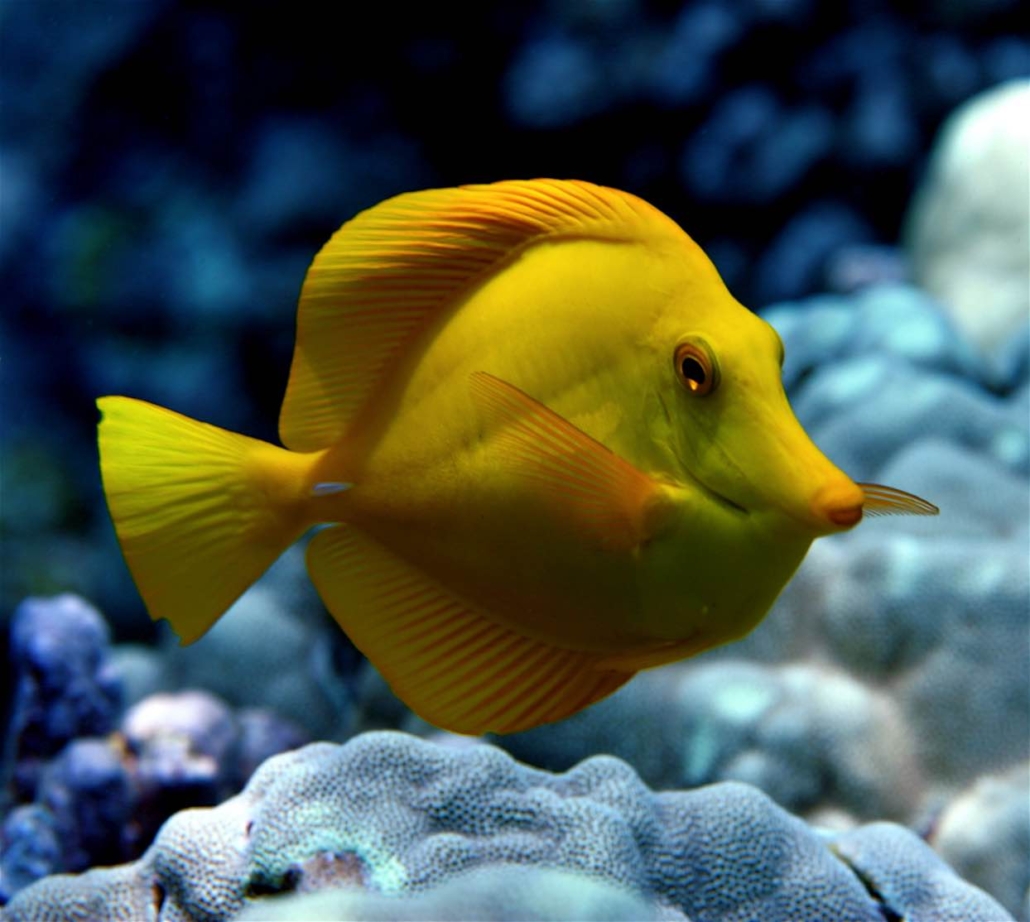
Yellow Tangs Are Hard to Miss
Few fish stand out against a dark lava reef quite like a yellow tang, known in Hawaiian as lauʻīpala.
Their bright, almost electric-yellow color makes them one of the easiest fish for new snorkelers to recognize. You may see individual yellow tangs grazing close to the reef or groups moving together through the coral.
Yellow tangs spend much of their day feeding on algae growing along reef surfaces, which means slowing down and watching the coral and rock below you can be more rewarding than swimming quickly from place to place.
They are also an important part of the broader West Hawaiʻi reef ecosystem, where yellow tang populations have been closely studied for decades.
Butterflyfish Bring Plenty of Color
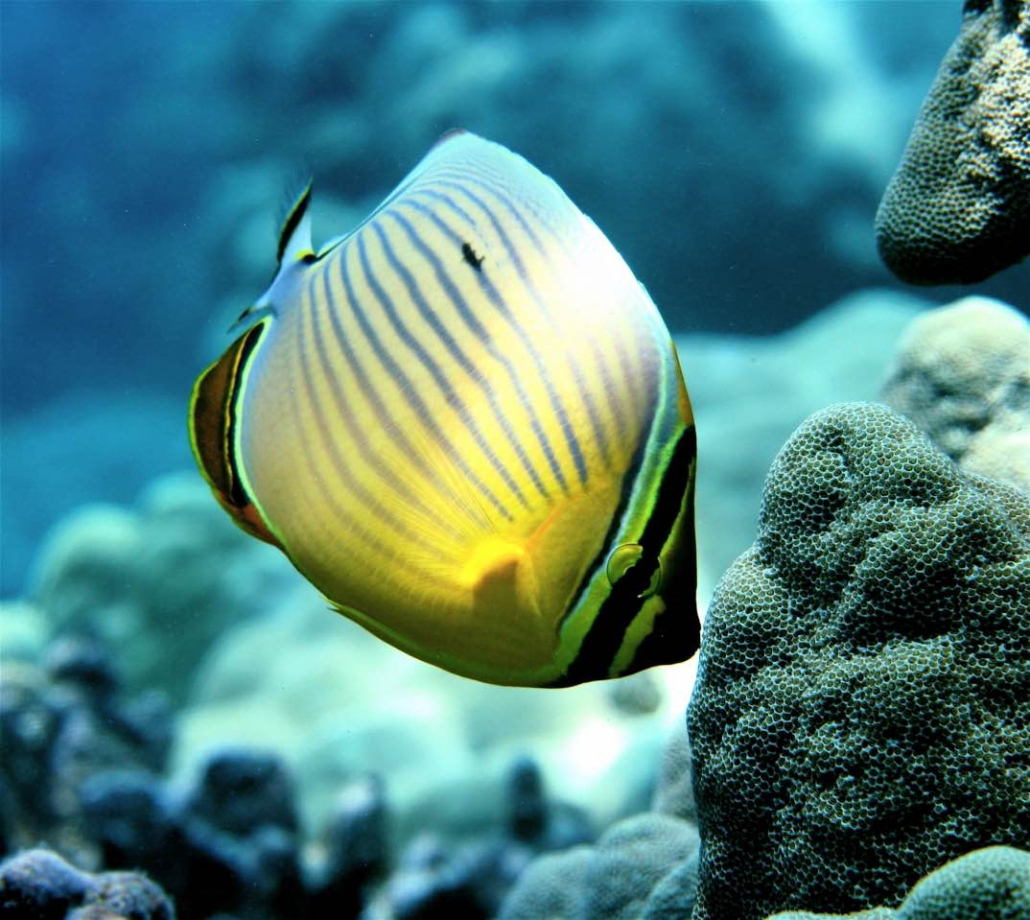
Hawaiian names vary by species, with names such as kīkākapu, lauwiliwili, and lauhau used for different butterflyfish found around the islands.
Their thin bodies and bold patterns make them fairly easy to pick out once you know what you’re looking for. Some have bright yellow coloring, while others feature combinations of white, black, and orange.
Rather than racing around the reef, try hovering quietly over one area for a few moments. You’ll often start noticing far more fish than you did when you first entered the water.
That is one of the simple pleasures of snorkeling here: the longer you look, the busier the reef becomes.
Watch for Parrotfish Grazing on the Reef
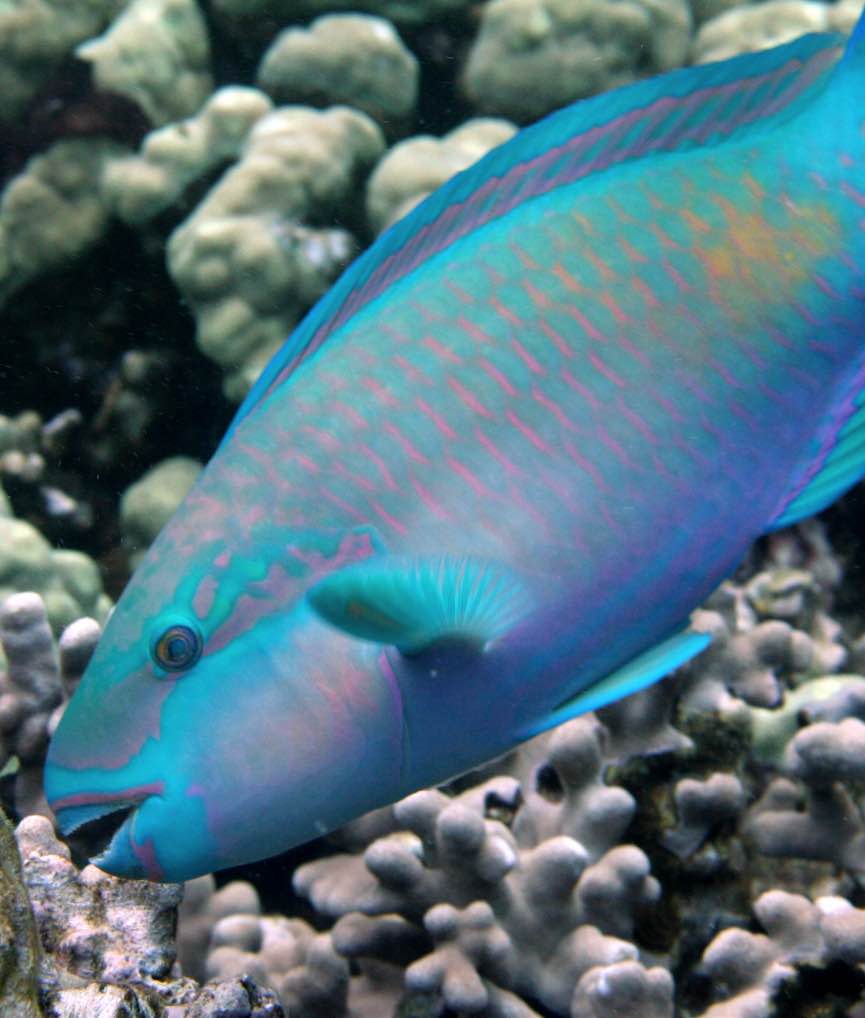
Parrotfish, known collectively as uhu in Hawaiʻi, bring a different kind of personality to the reef.
Depending on the species and life stage, their colors can range from softer browns and grays to brilliant shades of blue, green, and even pink.
They get their English name from their fused, beak-like teeth, which they use while feeding along the reef. If you hear faint scraping or crunching sounds underwater, take a look around. There may be a parrotfish nearby.
Historical surveys of Kealakekua Bay have documented uhu among the reef fish found in particularly high abundance in portions of the bay.
Moorish Idols Stand Out in a Crowd
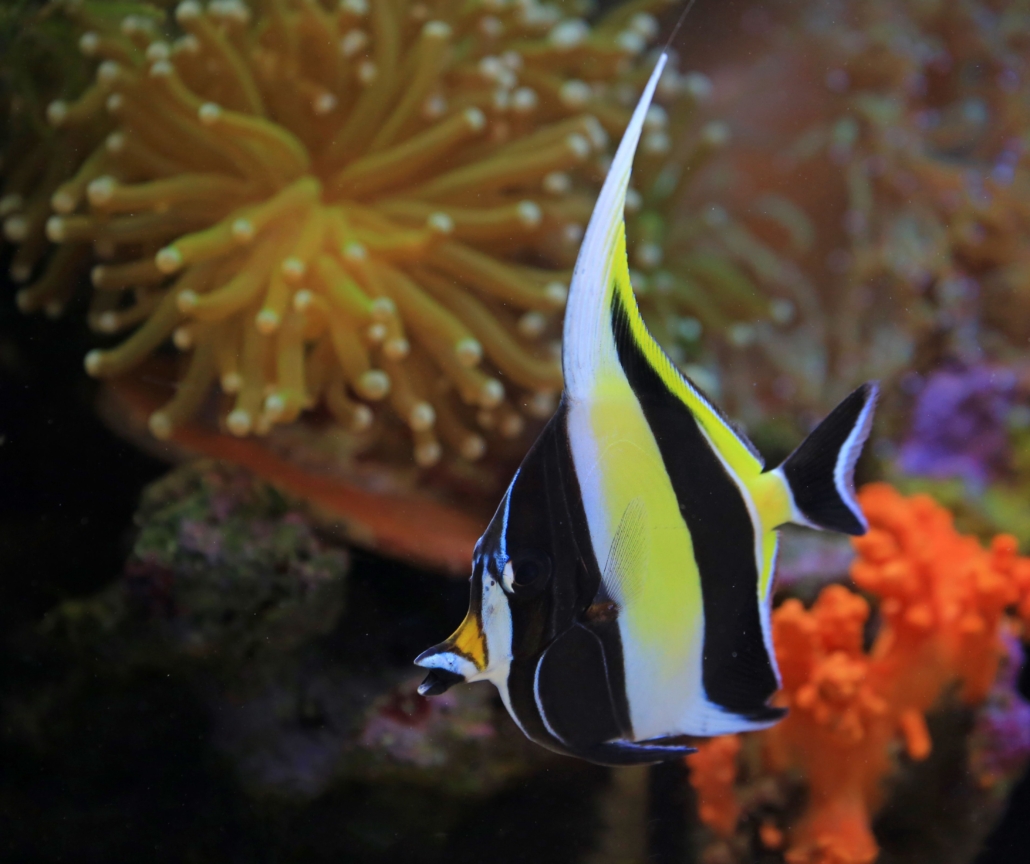
Moorish idols, known in Hawaiian as kihikihi, are one of those fish that can stop a snorkeler mid-kick.
They often move around the reef alone or in small groups, weaving around coral and lava formations.
Even among Hawaiʻi’s colorful reef fish, their unusual shape makes them easy to remember. Moorish idols have also been documented as an established part of the fish community around Kealakekua Bay.
If you’re new to identifying Hawaiian reef fish, this is a good one to learn before your trip. Spotting a species you recognize somehow makes the whole snorkeling experience more personal.
Look Under the Ledges for Eels
Not everything at Kealakekua Bay swims out in the open.
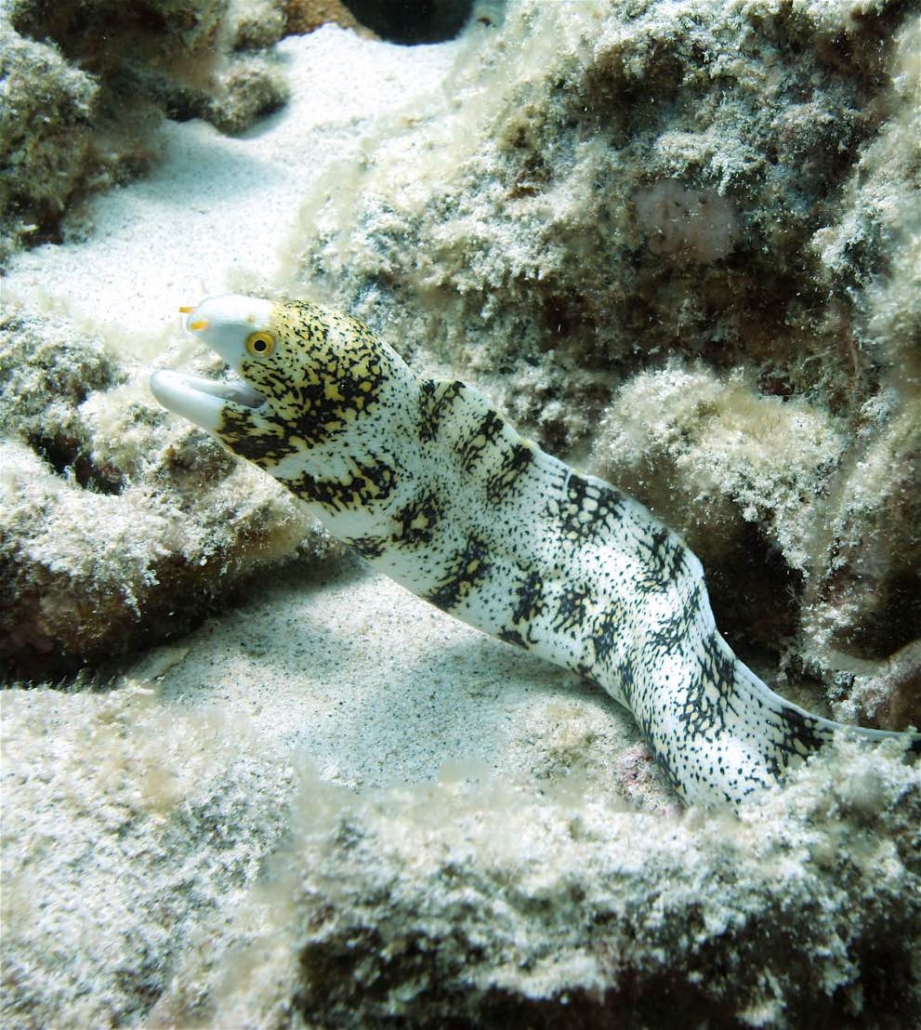
Moray eels, known generally as puhi in Hawaiian, spend much of their time tucked into holes, caves, and crevices in the reef.
They can look intimidating, especially when their mouths repeatedly open and close, but that movement is part of the eel’s normal breathing process.
A little patience and a careful eye are often all you need.
An Octopus Is a Great Find
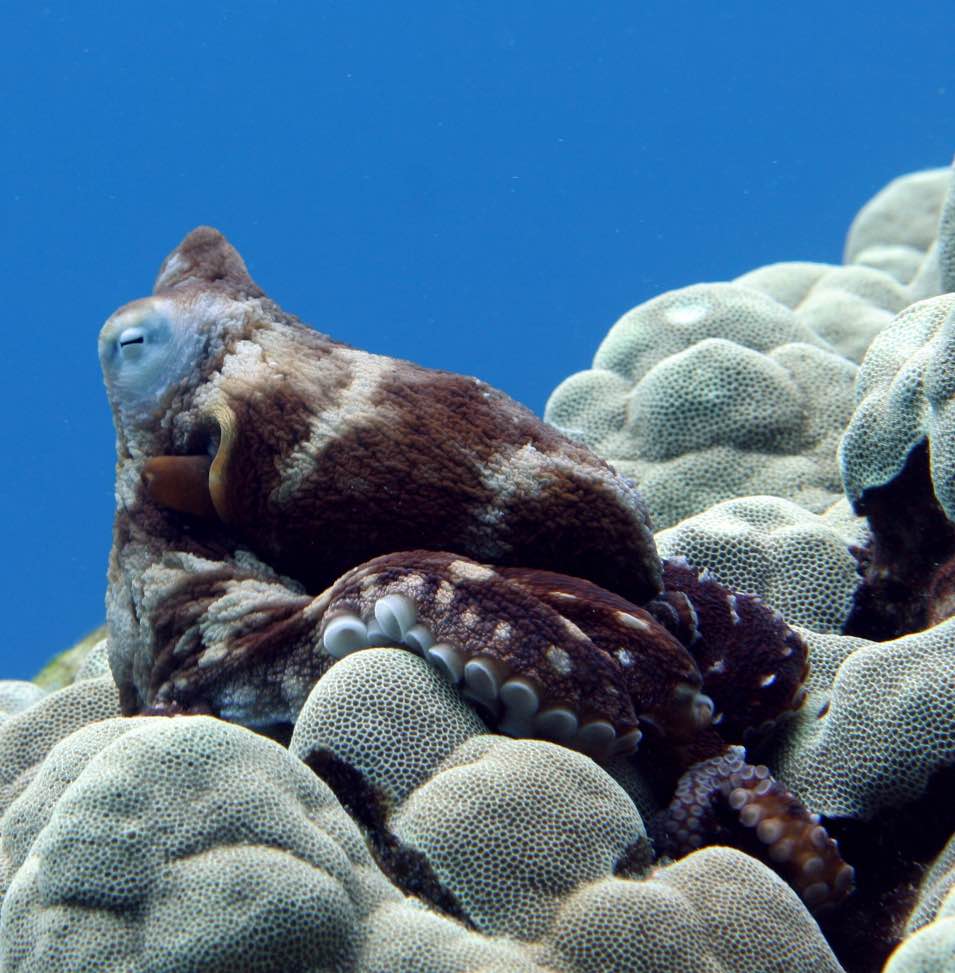
An octopus, or heʻe, sighting feels like a small victory.
These masters of camouflage can blend remarkably well into rock and reef, changing both their appearance and texture to match their surroundings. You may swim right past one without even realizing it.
Your best strategy isn’t to search for an obvious octopus shape. Instead, look for subtle movement or something about the reef that seems slightly out of place.
Octopuses are possible to spot around Hawaiʻi’s reefs, but they are much less predictable than the schools of colorful fish moving through the bay. Finding one is part patience, part observation, and part good luck.
Hawaiian Green Sea Turtles Occasionally Visit
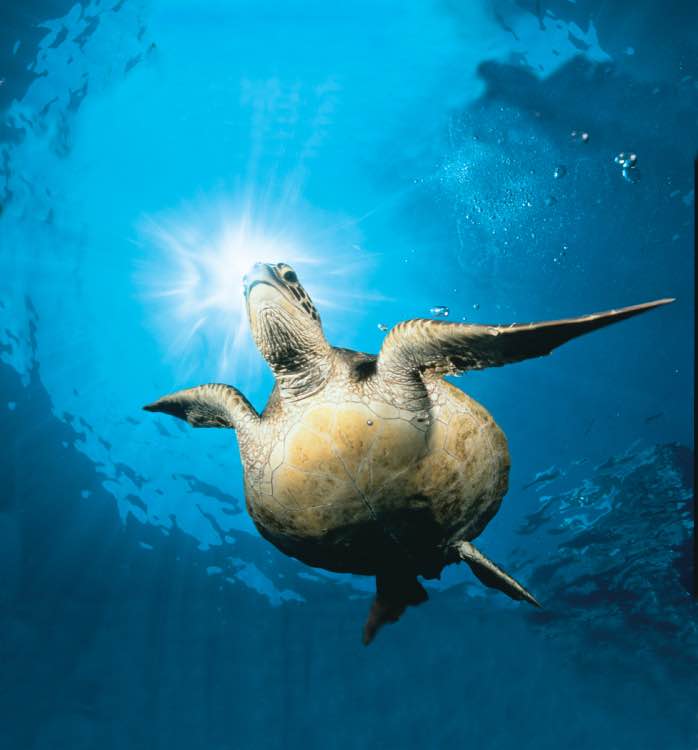
Seeing a Hawaiian green sea turtle, or honu, underwater is often a showstopper.
They move through the water with an effortless rhythm, and while you may see honu around the Kona Coast, a turtle sighting should always be considered a bonus rather than an expectation on a Kealakekua Bay snorkel.
If one does appear, give it plenty of room and let the turtle decide where it wants to go. NOAA recommends staying at least 10 feet away from sea turtles in Hawaiʻi, both in the water and on land.
There is no need to follow one for a better photo. Watching wildlife behave naturally is usually the better experience anyway.
Eagle Rays Are a Special Surprise
Every once in a while, something much larger than a reef fish appears.
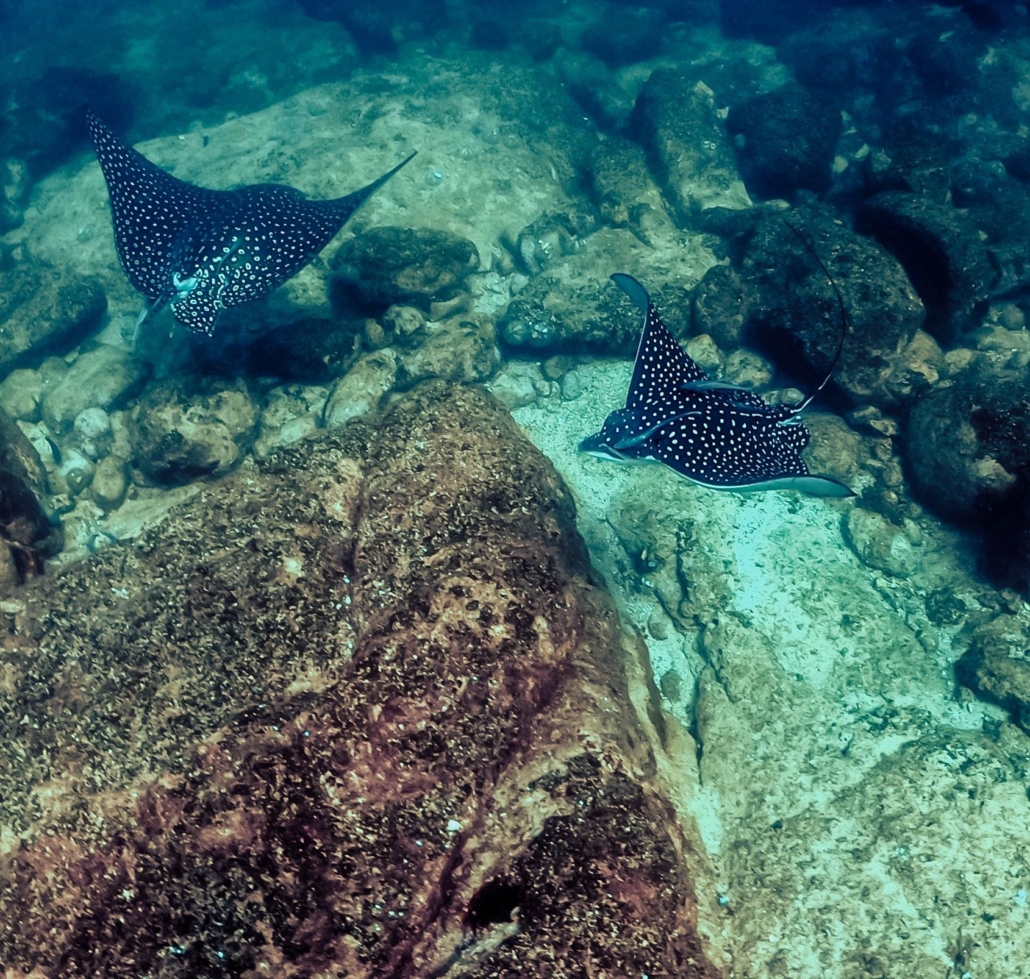
Spotted eagle rays, known by Hawaiian names including hihimanu and lupe, are among the more exciting animals snorkelers may encounter around Kona’s coastal waters. Rather than staying close to the coral, they may be seen moving gracefully through open or deeper water.
Their dark backs, white spots, and wing-like movements make them hard to mistake for anything else.
They’re not something to expect on every outing, which is exactly why seeing one can become one of those moments everyone is still talking about on the boat ride home.
Spinner Dolphins Are Best Seen From the Vessel
Kealakekua Bay is also known as a habitat for Hawaiian spinner dolphins. The Hawaiʻi Division of Aquatic Resources notes that dolphins are commonly seen within the bay.
For guests, however, spinner dolphins should be thought of primarily as a possible vessel sighting rather than a snorkeling encounter.
Hawaiian spinner dolphins, or naiʻa, feed offshore at night and use sheltered coastal areas for important daytime rest. Federal regulations prohibit swimming with, approaching, or remaining within 50 yards of spinner dolphins in Hawaiʻi.
If dolphins happen to appear during your cruise, watching them responsibly from the vessel gives them the space they need while still offering an incredible wildlife experience.

Every Day on the Kona Coast Is Different
One of the best things about Kona snorkeling is that each tour is a unique experience.
Some days, brightly colored reef fish steal the show. Another day might bring an eagle ray, turtle, or another unexpected visitor.
Conditions and animal activity also change throughout the year. During Hawaiʻi’s winter whale season, for example, guests traveling along the Kona Coast may also have the chance to spot humpback whales, or koholā, from the vessel.
And sometimes the highlight is something much smaller: an octopus hiding against the reef, a tiny fish you have never noticed before, or a perfectly timed school of yellow tangs passing underneath you.
You don’t need a rare animal sighting for Kealakekua Bay to feel alive.
How to Spot More Marine Life While Snorkeling
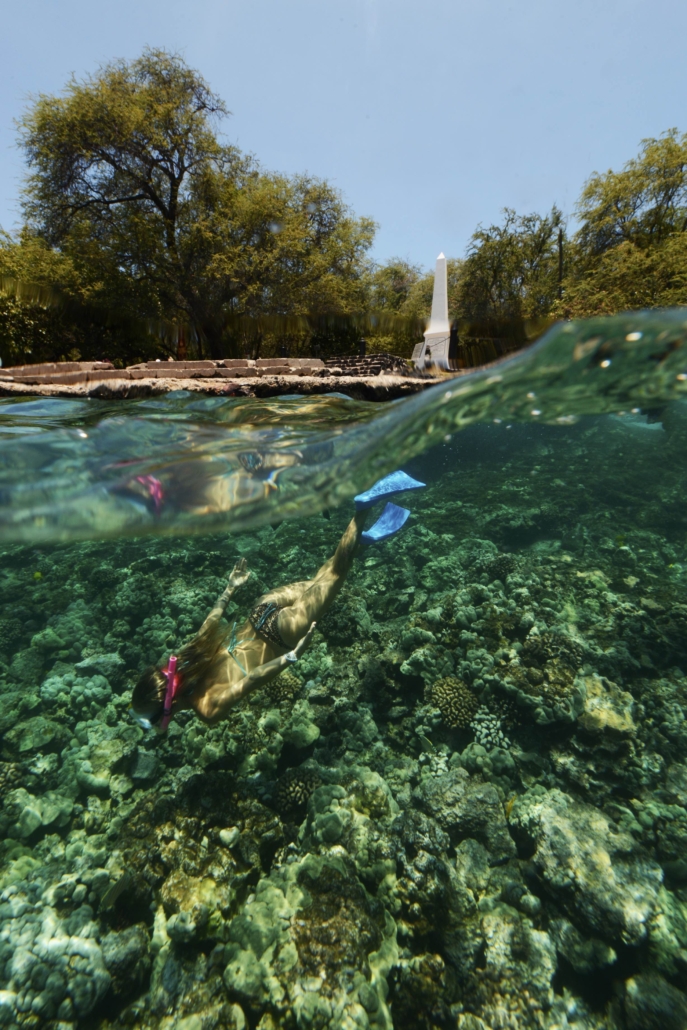
Seeing more usually has less to do with swimming farther and more to do with slowing down.
Give yourself a few moments after entering the water to become comfortable. Then start looking closely at different parts of the habitat rather than only watching straight ahead.
Scan the coral. Look along lava-rock ledges. Check the edges where the reef meets open water. Occasionally look farther out into the blue.
Most importantly, avoid chasing wildlife. The quieter and more relaxed you are in the water, the easier it becomes to notice what is already around you.
And don’t be afraid to ask the Fair Wind crew what they’ve been seeing recently. Our crew includes staff trained as naturalists who can help identify what you’re seeing, point out behaviors you might otherwise miss, and explain how to enjoy the reef while giving its wildlife plenty of space.
Experience Kealakekua Bay for Yourself
Photos can give you an idea of what lives beneath the surface, but there’s nothing quite like seeing the reef for yourself.
Fair Wind offers several ways to experience Kealakekua Bay. Guests can choose the Morning Kealakekua Snorkel Tour or Afternoon Kealakekua Snorkel Tour aboard the Fair Wind II, depending on the pace and timing that works best for their day.
For those looking to explore even more of the Kona Coast, the Hula Kai Kona Coast Snorkel Tour includes Kealakekua Bay as one of two snorkel destinations. It’s a great option for guests who want to experience the bay while also discovering a second snorkel spot along the coast.
Before your trip, explore our guide to snorkeling Kealakekua Bay and other Kona snorkeling destinations to learn more about the coastline, conditions, and underwater environments you’ll be visiting.
Then put on a mask, take your time, and keep your eyes open.
You never know what might swim past!
Most Popular - Use Code: Morning10

FROM
$179
Morning Kealakekua Snorkel Tour
Depart in the morning on an aquatic adventure that will take you through the colorful history of the Big Island.
Multiple Snorkel Stops

FROM
$189
Kona Coast Snorkel Tour
Discover remote locations as unique as the vessel that gets you there. Hula Kai is an exciting yet truly relaxing experience!
Trending - Use code SAVE20
FROM
$130
Afternoon Kealakekua Snorkeling Tour
A shorter version of our popular morning snorkel tour, the afternoon tour is a 3-½ hour adventure to the incredible Kealakekua Bay!