Kona Top 10 Things To Do
Kailua-Kona or Kona, on the Big Island of Hawai’i, is the largest island in the entire Hawaiian island chain. The area of Kona, or Kailua-Kona, on the west side of the Big Island, is known for its exceptional snorkeling, diving, sandy beaches, volcanic coastline, pervasive Hawaiian culture, and premier coffee-growing plantations. Let’s explore the best things to do in Kona.


1. Snorkeling Excursions
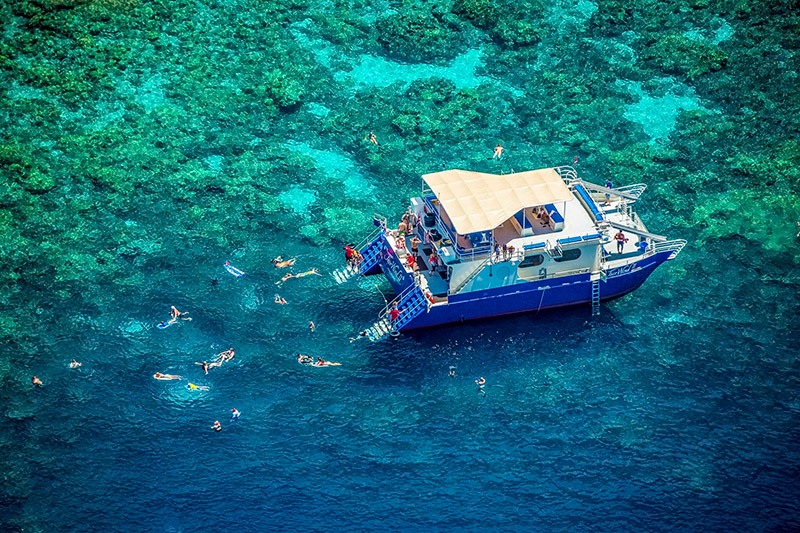
Nestled on the coast, the town of Kona naturally revolves around the sea. It offers incredible opportunities to engage in various kinds of ocean recreation, as well as to get up close and personal with the marine creatures. Argued to have the best snorkeling in Hawai’i, there are many sites around Kona to explore under the sea. Here are a few of our favorites:
Kealakekua Bay, Coral Gardens, Driftwoods, Rob’s Reef, and Turtle Rock.
Fun fact
Snorkeling is a safe and easy way to see marine life in Hawaii
Interesting fact
You may see the state fish of Hawaii, the Humuhumunukunukuapuaʻa (Reef triggerfish)
2. Kealakekua Bay
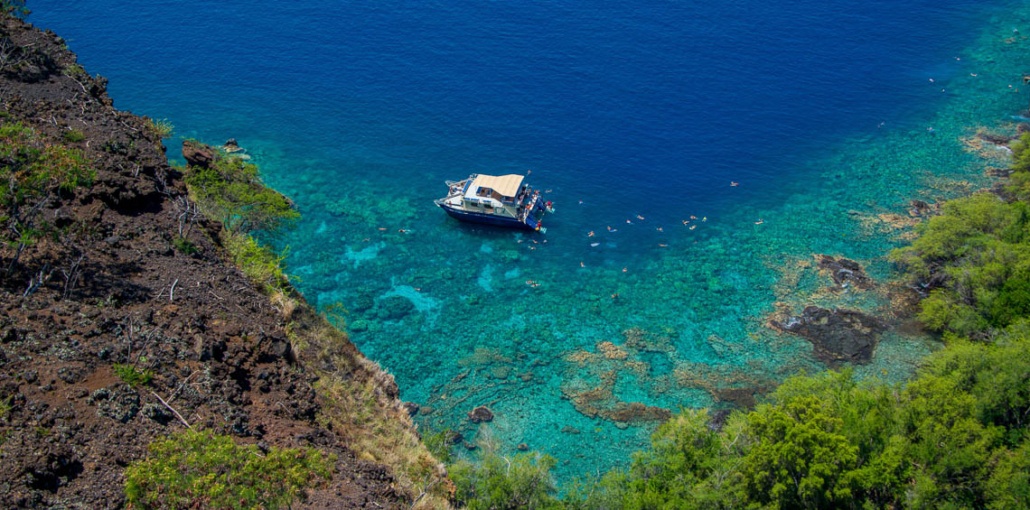
Kealakekua Bay features a pristine sheltered bay where vivid turquoise waters meet 100-foot tall volcanic cliffs. Kealakekua Bay is the Big Island’s only underwater state park and serves as a marine sanctuary for a diverse variety of marine life including colorful coral, angelfish, lizard fish, butterfly fish, among all sorts of other rare aquatic creatures. Due to the remote and difficult to access location, the best way to reach Kealakekua Bay is by boat – which in turn reduces foot traffic and keeps the bay relatively private for you to explore its underwater treasures. This fact contributes to Kealakekua Bay being regarded as Hawaii’s top snorkel spot.
Fun fact
Kealakekua translates to “pathway of the god”
Interesting fact
The technicolor corals, tropical fish, and diverse ocean animals found here are readily able to be viewed as visibility can reach almost 100 feet!
3. Captain Cook Monument
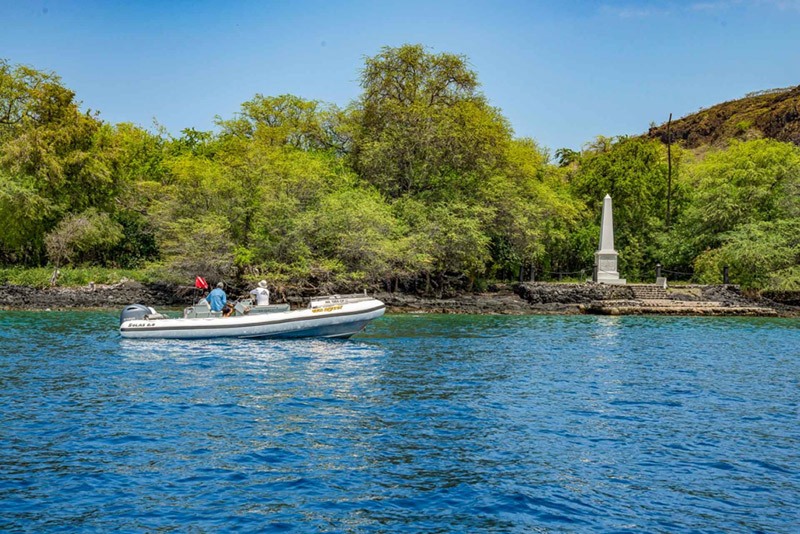
Also located within Kealakekua Bay, the Captain Cook Monument tells a history that can help illuminate the story of native Hawaiians and first contact with westerners. Kealakekua Bay is traditionally a sacred site, and at the time that Captain Cook made landfall for the second time in Hawai’i, Hawaiians were celebrating the makahiki festival, a tribute to the god of peace and fertility, Lono’I’ka’makahiki. The white kapa banners flown on crossbars symbolized the god, and Captain Cook and his ships clad with white sails may have caused uncertainty leading to people mistakenly believing that he was Lono’I’ka’makahiki. The Hawaiians lavished Cook as a god and gifts and culture were shared between the Hawaiians and the British sailors. Chief Kalaniopu’u actually gifted Cook with his ‘ahu’ula (royal cloak) and mahiole “helmet” in a gesture of goodwill. When Cook left the bay, he encountered a fierce storm drawing the sailors back to the bay, where a kapu, or prohibition, had been placed on the bay after the makahiki festival had finished.
Their respect for Cook diminished, and wanting coveted metals in exchange for all of the supplies the Hawaiians had given the English sailors; the Hawaiians helped themselves to metals and the Discovery’s cutter. Cook took a party of nine marines and went ashore to take Chief Kalaniopuu hostage until the cutter was returned. However, for various reasons, the plan failed, and Captain Cook and four Marines died in a skirmish near the monument’s location on Feb. 14, 1779.
To access these incredible ocean spots and to learn more about Hawaii’s rich history, Fair-Wind offers snorkel excursions and private charters to Kealakekua Bay, South Kona, and Manta Village.
Interesting fact
The British erected the Captain Cook Monument to honor him in the place that he died
4. Swim with Manta Rays
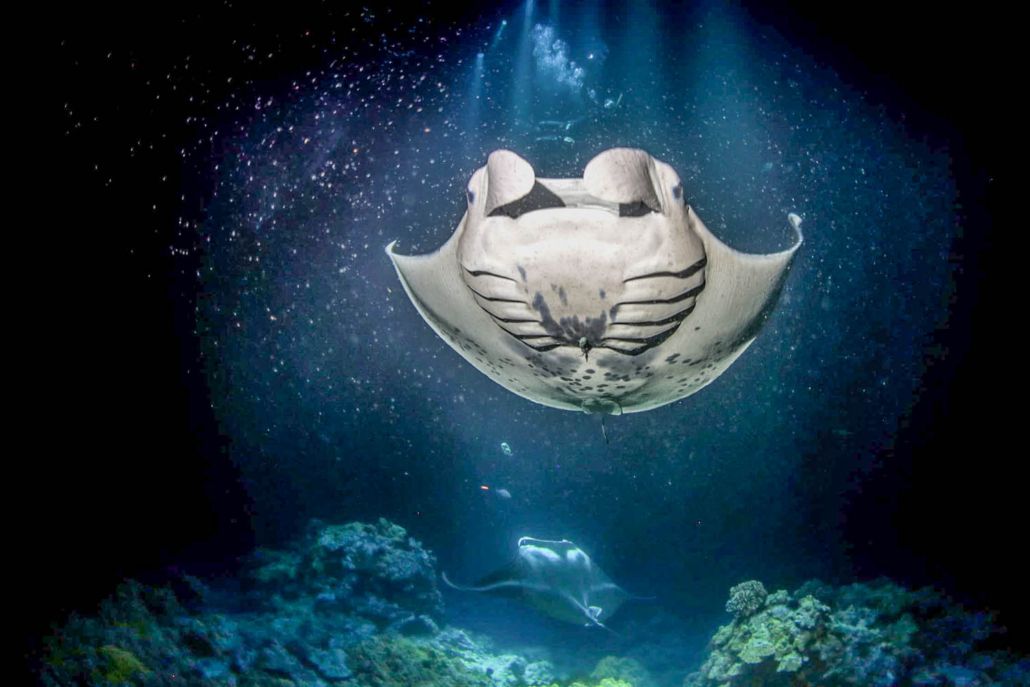
This is one of those bucket list items you must be sure to do here in Kona. Just offshore of Kona, there are a few locations where these massive rays come to feed on plankton at night. Tour operators will bring you out around sunset and illuminate the sea below to attract plankton while you wait for the multitude of manta rays to come and gobble up plankton by the mouthful. This feeding ritual is just incredible to view. They swoop by at incredible speeds with just a flap of their giant wings and turn in circles to catch as much plankton as possible in their massive filter-feeding mouths. It’s a bewildering and humbling experience to view these elegant creatures at such close range. Remember not to touch or block these beauties as they eat their dinner.
Fair-Wind offers snorkel tours to Manta Village every evening just outside of Keauhou Bay, allowing visitors to get up close and personal with these giant beauties.
Fun fact
Manta Rays can swim up to 15 miles per hour
Interesting fact
They have the largest brain-to-body ratio of any fish
5. Kahalu’u Beach Park
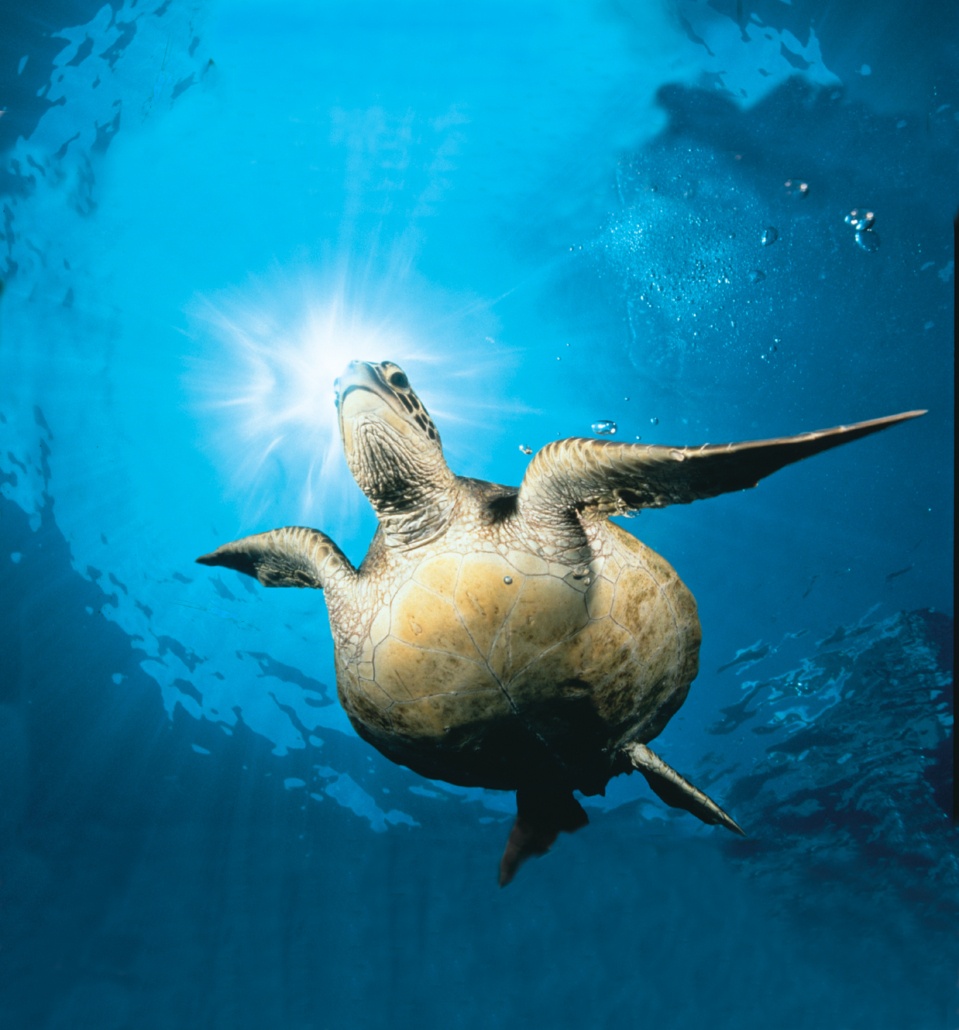
In Kahalu’u Bay, you can find honu, or Hawaiian green sea turtles, that frequent these shores. The beach park is protected by a submerged rock wall making it accessible for snorkelers to explore the waters below frequented by all sorts of tropical marine life. Please note, sea turtles are protected under the Endangered Species Act, and it is illegal to touch and disturb them. Fines have been reported up to $10,000 for touching sea turtles in Hawai’i. Need another reason to resist the urge to touch them? The oils and bacteria on our hands and bodies can decrease their natural protection and cause disease and tumors upon the bodies of these beautiful creatures.
A big way you can help protect our sensitive reefs by only using reef-safe sunscreen! Two of the main ingredients that act as UV blockers in regular sunscreen, oxybenzone, and octinoxate, leach into the ocean in popular swimming spots. These chemicals inhibit the growth of young corals and cause coral bleaching even at low concentrations, having a significant impact on overall reef health and animals even higher up the food chain. In July 2018, Hawaiian policymakers passed a bill that will ban the sale of sunscreens containing these chemicals starting in 2021. Help our reefs now by looking for sunscreens marked “reef-safe” and “biodegradable,” or using a mineral sunscreen whose primary ingredient is zinc oxide or titanium oxide. Our marine life will thank you!
Fun fact
Hawaiian green sea turtles can weigh up to 700 lbs
Interesting fact
The “green” in their name comes from the color of fatty tissues
6. Kaloko-Honokohau National Historical Park
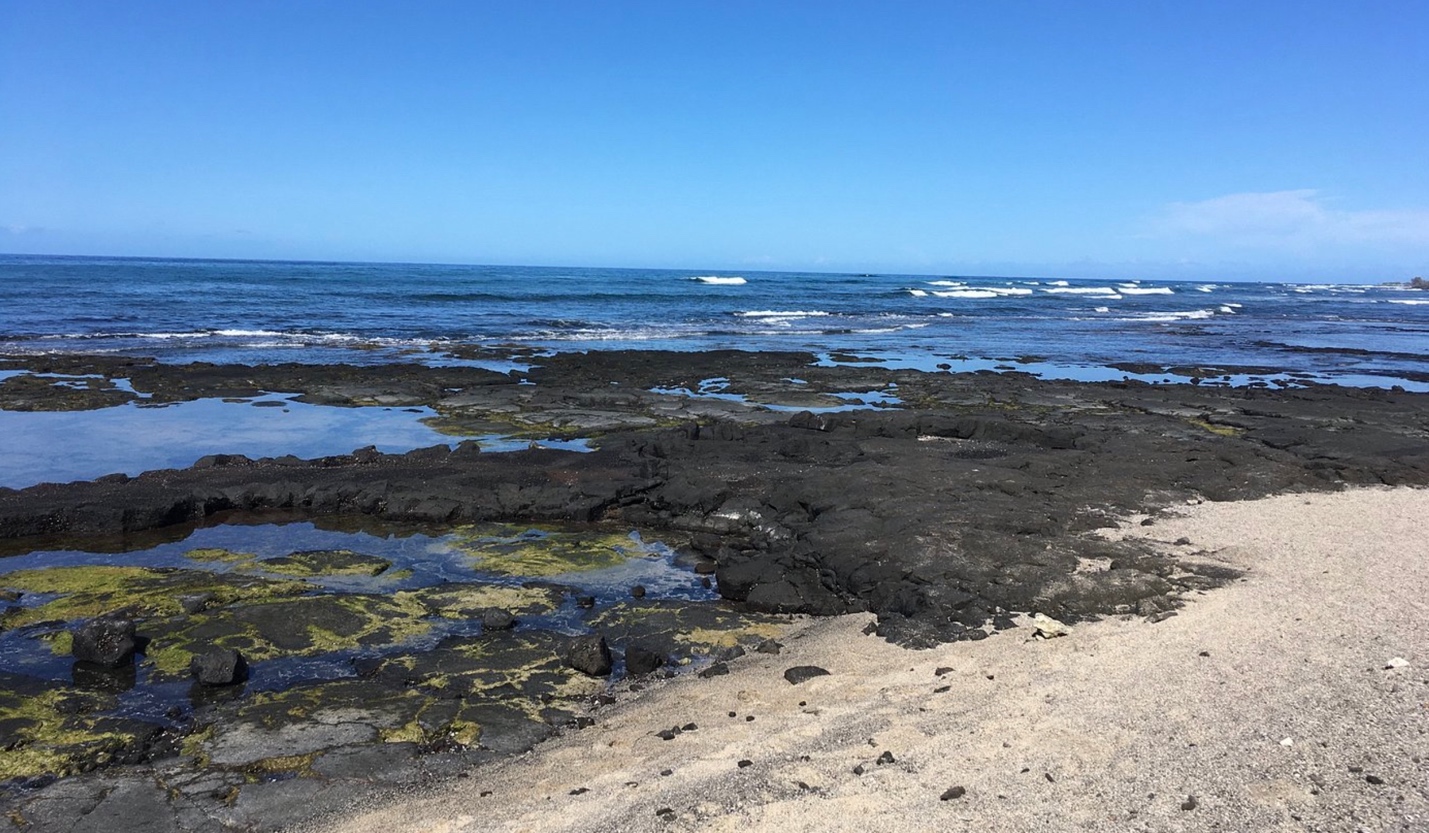
Visitors encounter a cultural and spiritual experience at Kaloko-Honokohau National Historical Park, where the spirit of the Kanaka Maoli people flows. Established for the preservation, protection, and interpretation of traditional native Hawaiian activities and culture, Kaloko-Honokohau is the site of an ancient Hawaiian settlement that encompasses portions of four different ahupua’a, or traditional sea-to-mountain land divisions. Resources include fishponds, kahua (house site platforms), ki’i pohaku (petroglyphs), holua (stone slide), and heiau (religious site).
Trailhead #1: Hale Ho’okipa Welcome House
Trailhead #2: Kaloko Road: This trailhead is an unpaved road that leads to Kaloko fishpond.
Trailhead #3: Honokōhau Harbor: Just south of Trailhead #1
7. Hulihe’e Palace
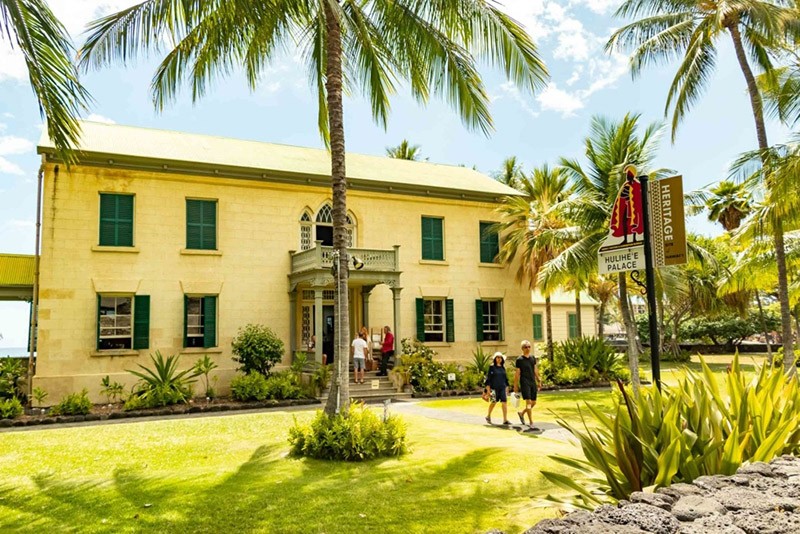
Formerly a summer home for Hawaiian royal families, the Hulihe’e Palace now serves as a historic house museum in Kona. During the Kingdom of Hawaii, this home housed more members of Hawaiian royalty than any other residence in Hawai’i. Restored by the Daughters of Hawai’i who defended the home from land-hungry developers, Hulihe’e Palace now serves as a museum showcasing artifacts from the time of Queen Kapi’olani and King Kalakaua: ancient weapons of war, furniture constructed out of koa wood, royal portraits, and kapa to name a few. In June, the King Kamehameha Day Parade is an incredible event to experience Hawaiian culture come alive on the streets of Kona.
Interesting Fact
Originally built out of lava rock, and was a residence of King Kamehameha. One of three Royal Palaces in the United States, all located in Hawai’i
8. Pu’uhonua o Honaunau (City of Refuge)
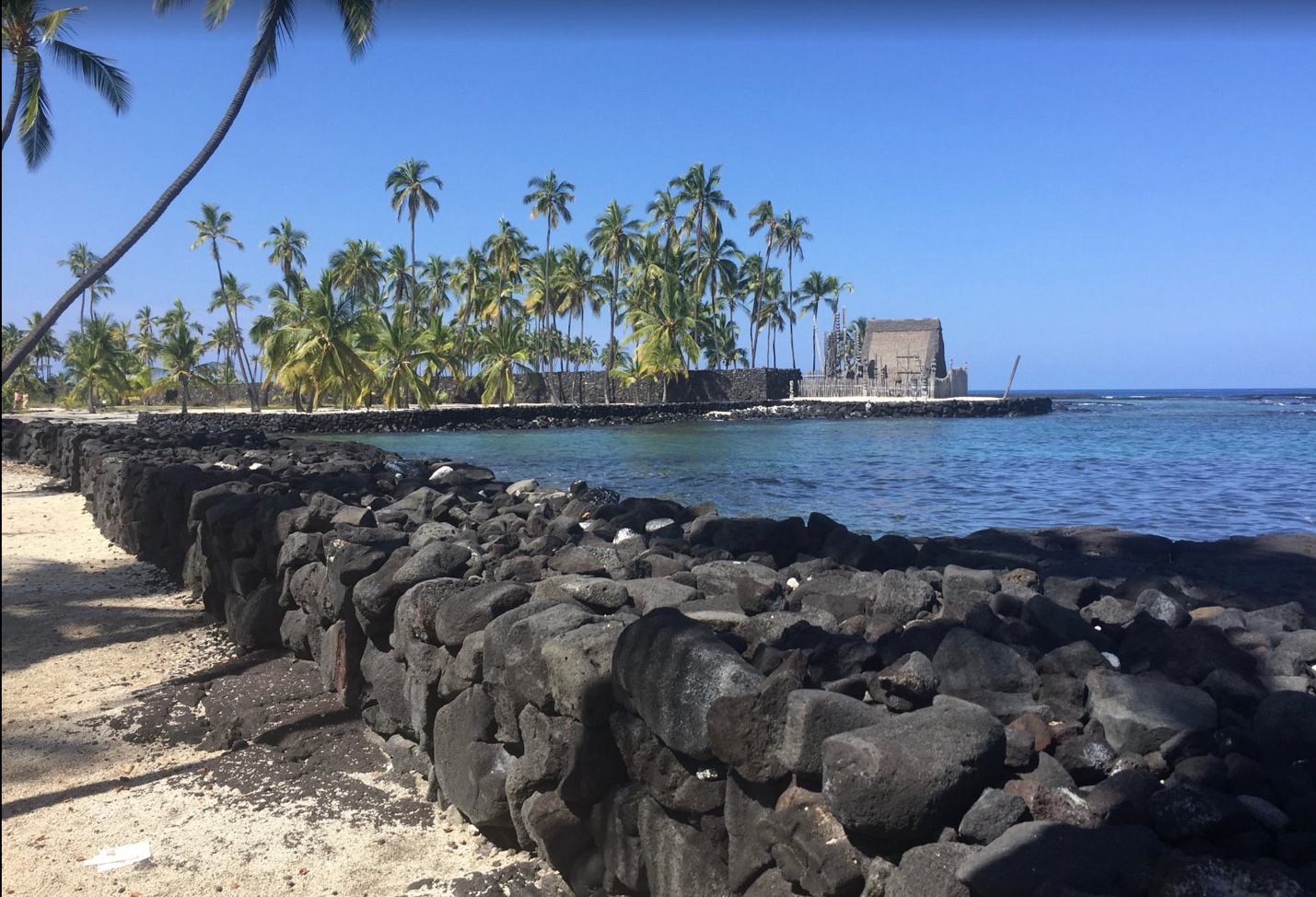
Puʻuhonua o Hōnaunau National Historical Park is home to some of the most significant traditional Hawaiian sites. One of the most prominent features of the park is the puʻuhonua or place of refuge, which is enclosed by the Great Wall, a massive 965-foot long masonry wall. Serving as a sanctuary in ancient times for defeated warriors, noncombatants, and those who violated the kapu (sacred laws), the Puʻuhonua o Hōnaunau remains a most sacred place to those who step foot on its grounds. The protected waters of Hōnaunau Bay combined with the availability of water from brackish springs provided the ideal location for the aliʻi – Hawaiian royalty – who established important residential and ceremonial sites nearby, an area known today as the Royal Grounds. For several centuries, the puʻuhonua, the Royal Grounds, and adjacent areas formed one of the primary religious and political centers within the traditional district of Kona.
9. Kona Coffee
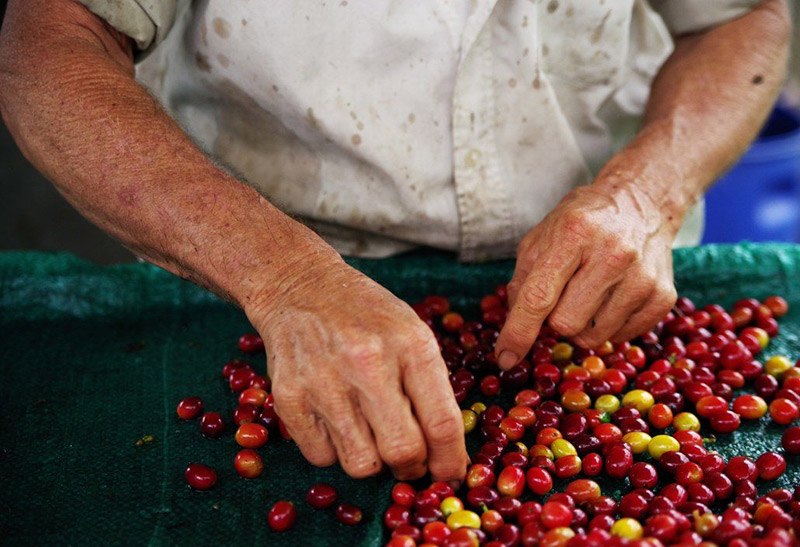
Kona is world-renowned for its rich coffee grown in idyllic conditions here on the slopes of Hualalai and Mauna Loa. Mineral-rich volcanic soils in combination with sunny skies, light rain, and mild winds create the perfect growing conditions for this revered Hawaiian coffee. Plantations are still maintained today by residents in the Kona area, and stopping by one of the many plantations is a great way to support local businesses! A few plantations that offer tours include Greenwell Farms, Mountain Thunder Coffee Plantation, Hula Daddy Coffee, and the Kona Coffee Living History Farm. Coffee aficionados rejoice! There is even the Kona Coffee Cultural Festival held every November in Kona, so make sure to stop by if you’re around at that time.
Fun fact
Samuel Ruggles brought coffee to the Kona district in 1828
Interesting fact
Kona coffee blooms in February and March
10. Kona Cloud Forest
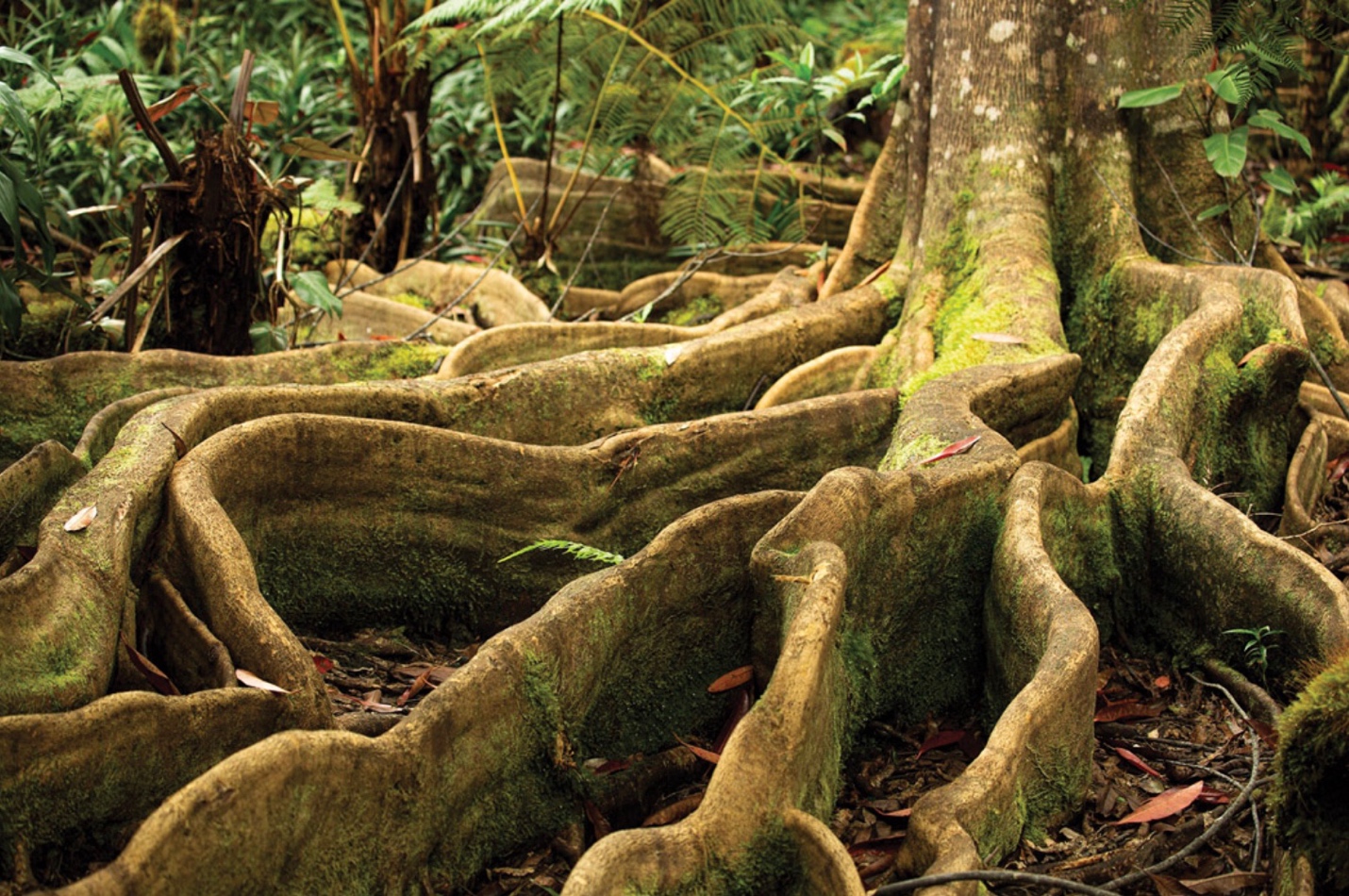
Want to get lost in a cloud forest? Visit the Kona Cloud Forest Sanctuary for guided tours of this 70-acre sanctuary, where native Koa, Ohia, bamboo, and giant tree ferns proliferate! A botanical walking tour here lets you take in the smells and sights of an important, delicate ecosystem that the tropical cloud forest inhabits here in Hawai’i. Located just a 15-minute drive from the Kona airport, this walking tour is a great way to spend half a day taking in the incredible fauna and flora found in this forest. Reserve in advance for a tour that lasts about 3 hours.
Fun fact
Cloud forests receive much of their precipitation from moisture on leaves and from clouds
Interesting fact
Many endemic birds such as the Hawaiian honeycreeper and Hawaiian hawk can be found in this forest
Kona is a special place with a multitude of options for oceanic exploration, culinary wonder, cultural activities, and experiencing what the Big Island has to offer. We welcome you to come and explore with us!